There is a certain appeal to the way in which a yoga session begins. Even before getting into the difficult asanas and stretching exercises, there is always a certain protocol to be followed. This is Namaskara, also known as salutations, an introductory process that does so much more than get you physically prepared.
Salutations are the beginning of your practice. They create a connection between your wandering mind and your body. The wonderful thing about them is that they can be done by anyone. There is no need to be flexible or to have prior knowledge of the practice – just be willing to move.
To a great extent, salutations function as a reset switch. They enable you to move away from the state of distraction towards being aware and present in the moment. It does not matter whether you have experience or are flexible; you will still see the change.
The Power of Salutations
A salutation, at its core, consists of physical actions associated with breathing. It works through an inherent rhythm created by inhaling and exhaling during every posture, creating a sense of moving meditation.
This is the exceptional quality of the exercises due to which they are able to serve several purposes at once. When you keep doing your exercises, your body gradually warms up through various stretches, folds, and strength-building movements. You get the feeling of your tense muscles loosening and joints getting more flexible.
At the same time, your mind becomes focused on performing actions. No more random thoughts; you start following the simple cycle of move-breath-repeat. This is where the magic happens.
Varied Salutations, Varied Emotions
There is no single feel to all salutations, and it is the differences that make them unique. They each carry their own emotion and intent.
Sun Salutation: Dynamic and Rhythmic
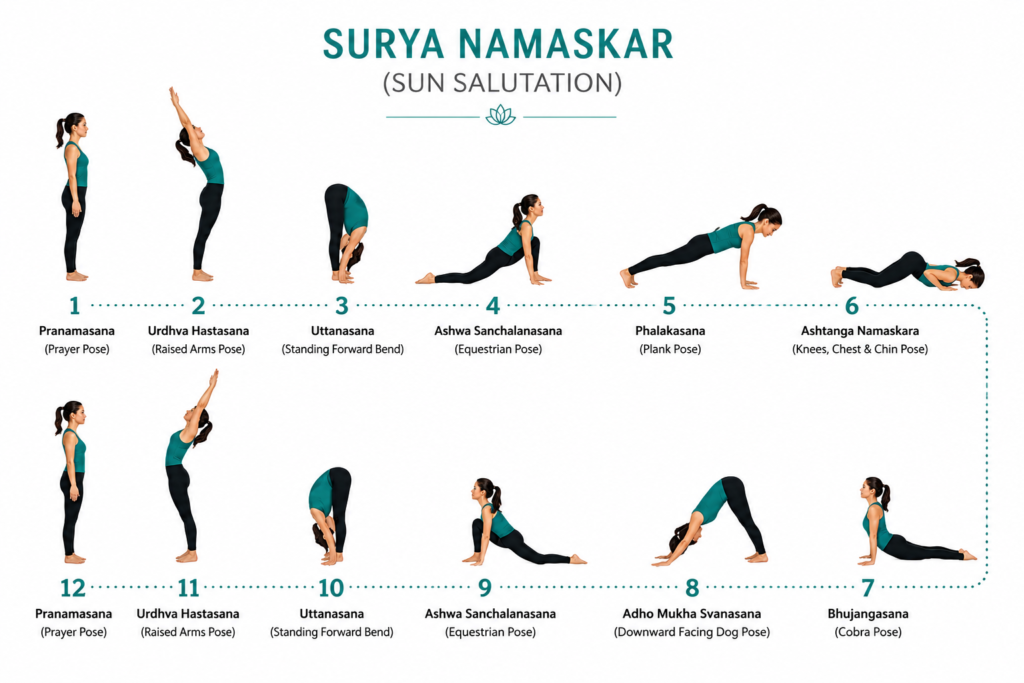
Sun Salutations are famous for their dynamic and rhythmic qualities. Sun Salutations involve movements such as forward bends, plank poses, gentle back-bending poses, and down dogs done in a continuous flow. The sun salutations can be taken in the morning because they help create heat within the body.
Hatha Salutation: Slow and Supportive
A slower pace characterizes the Hatha style of salutation compared to others. It involves slow movements such as knee-supported movements from the knee to the chest to the chin. This type of salutation is very useful for beginners who want to avoid putting much pressure on their joints.
Moon Salutations: Serene and Cooling
While Sun Salutations give you a lot of fire and intensity, Moon Salutations carry a completely different energy. This is because of the gentle side stretches and deep hip openings performed during this routine, which allow you to become more introspective. Performing Moon Salutations in the evenings will help you release tension and unwind.
Earth and Sea Salutations: Stability and Creativity
In contrast to Earth Salutations that focus on strength and stability in their postures, Sea Salutations are dynamic and creative, and most of them include wave-like movements that allow us to feel tranquil and liberated.
Learning to Love the Flow
Salutations are magical not only due to the physical benefits that they bring, but also because of the feeling that they create. These are moments when we can take time off and slow down, regardless of how busy our schedules are.
Whether we prefer Sun Salutations with their lively flow or Moon flows that are more soothing, the main idea is not perfection, but the connection with ourselves. Soon enough, you will come to realize that the flow is something to look forward to every single day.